
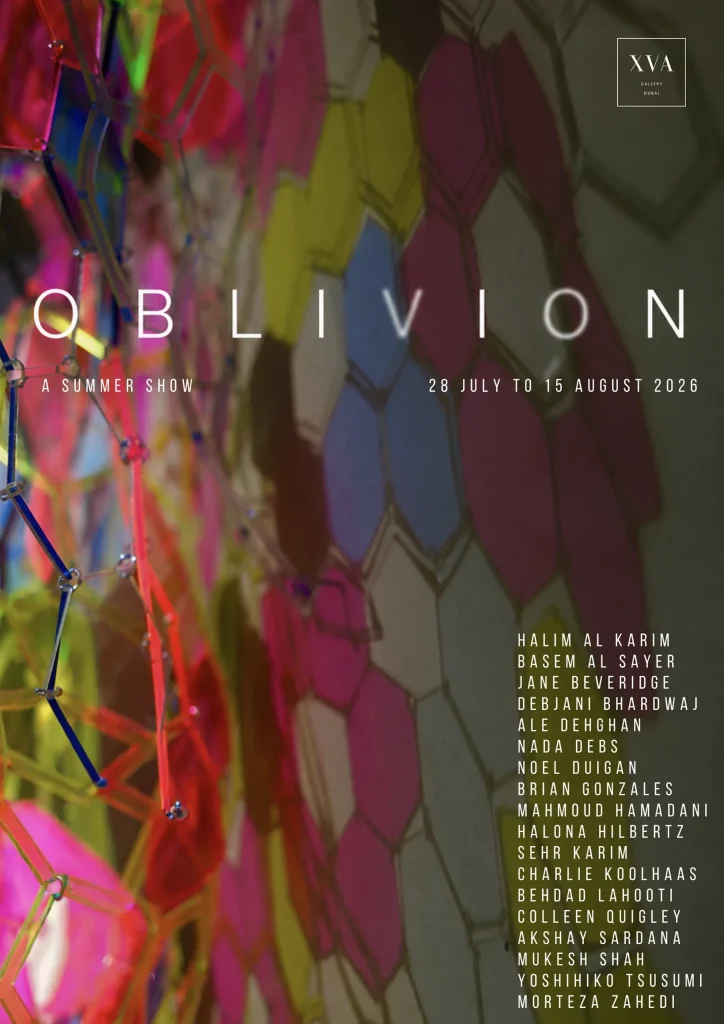
Oblivion
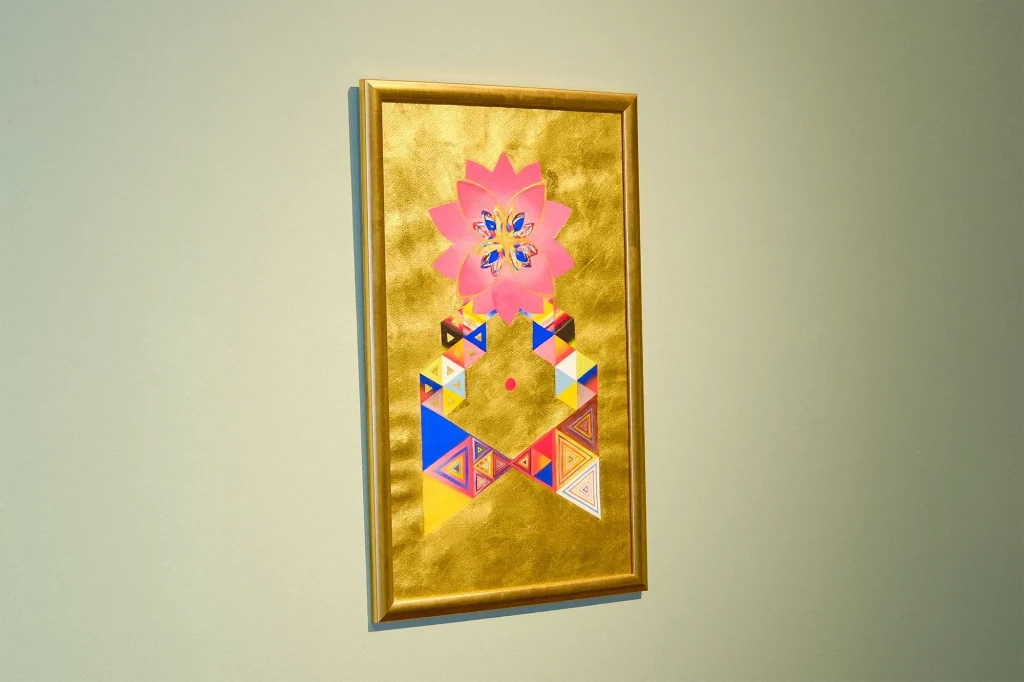
To forget is not only to lose. Oblivion is also where the mind makes room; clearing space for what matters now, letting go of what no longer serves. The works gathered here treat forgetting as a generative act: a hairbrush, an armchair, each object caught mid-transformation, shedding one meaning to make way for another.
Working across metal, textile, found and fabricated materials, the artists in this exhibition ask what becomes possible once memory stops holding on so tightly. Domestic and bodily objects are freed from their original function, made strange, playful, ornamental, evidence not of loss but of renewal, of a self continually remaking itself. Nothing here mourns the past. It repurposes it.
Forgetting, in this light, is less erasure than editing: a structural condition of how identity stays alive, how history keeps moving, how images and objects find new use once their first purpose has passed. What remains in these works is not absence but possibility: gesture freed from context, object freed from owner, form open to whatever meaning arrives next.
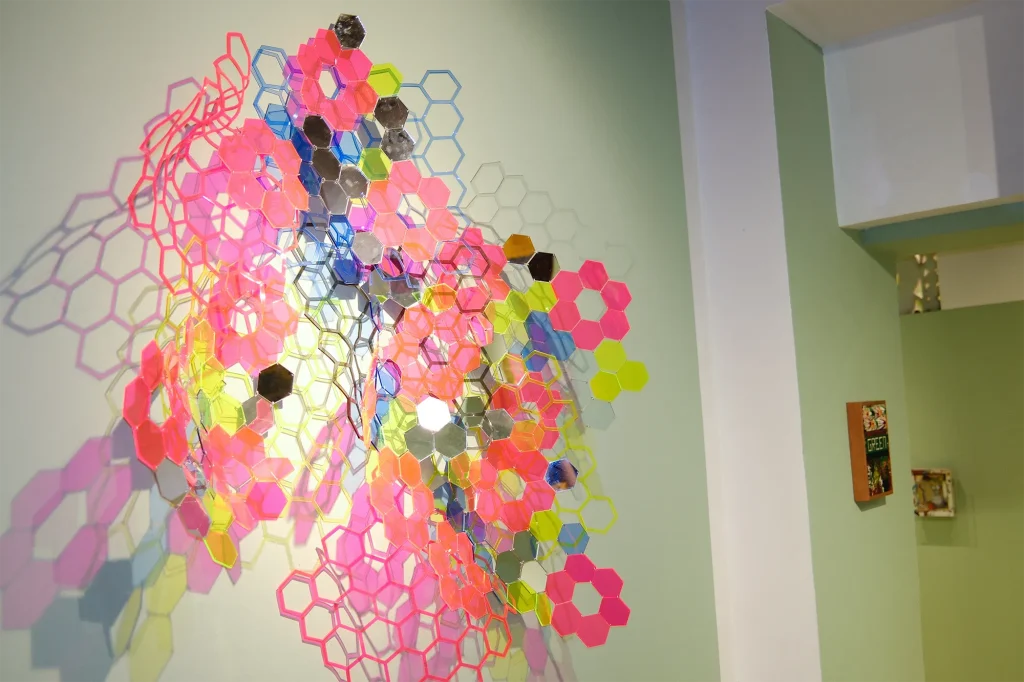
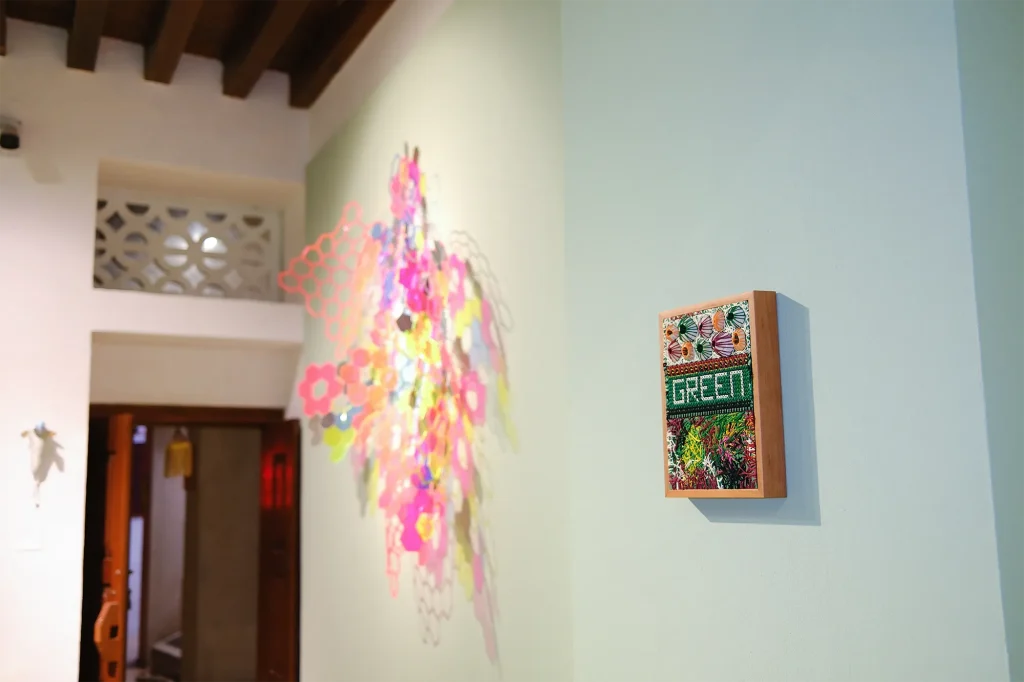
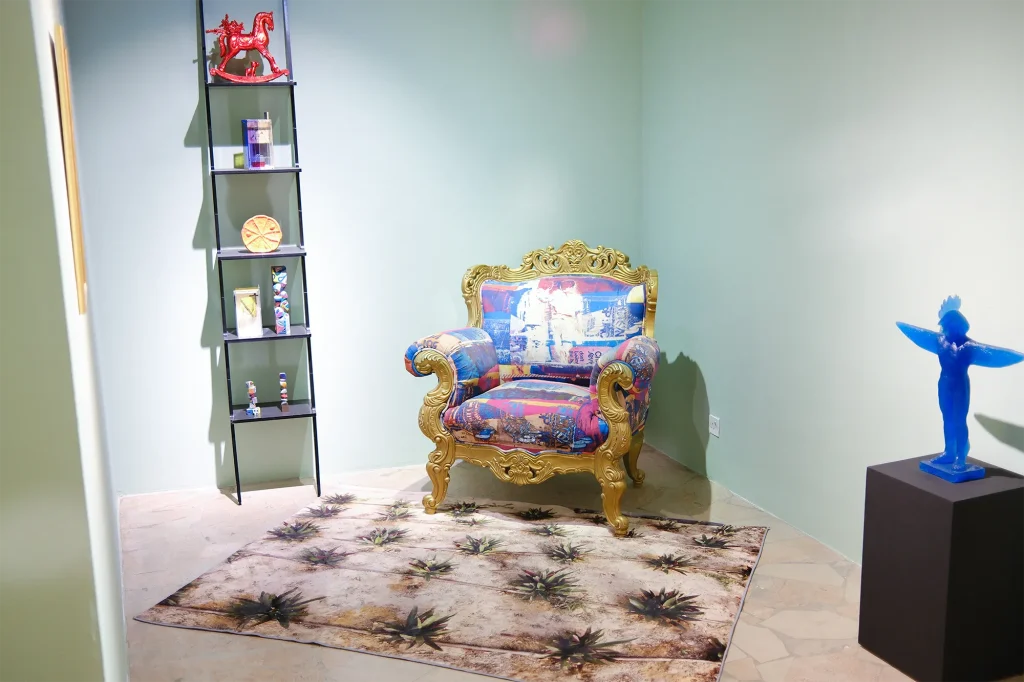
The exhibition in view.
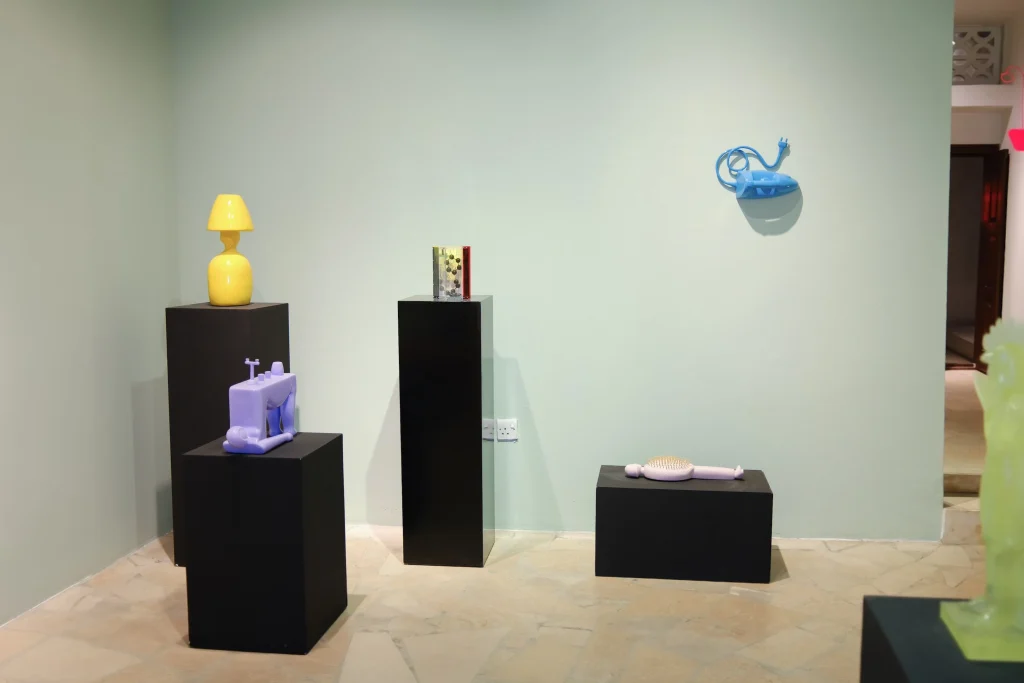
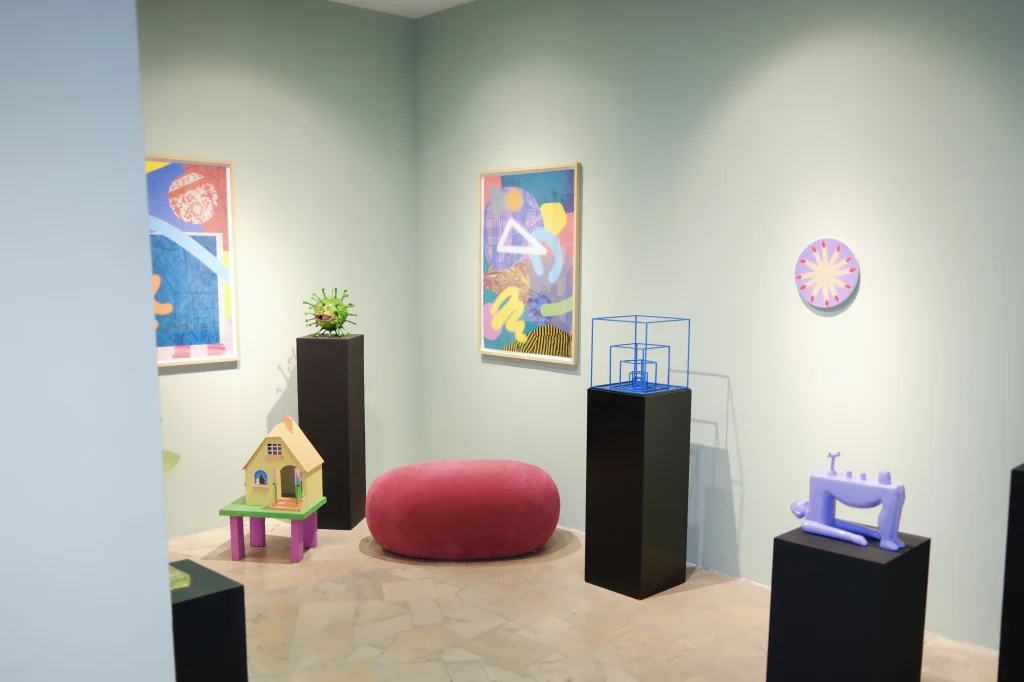
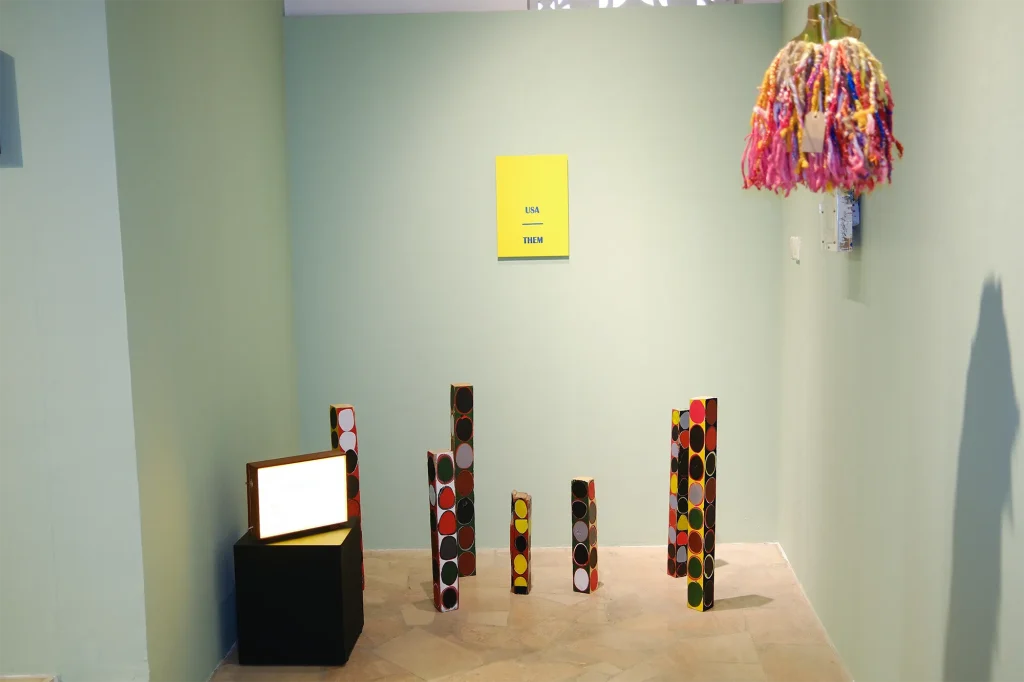
After the Image
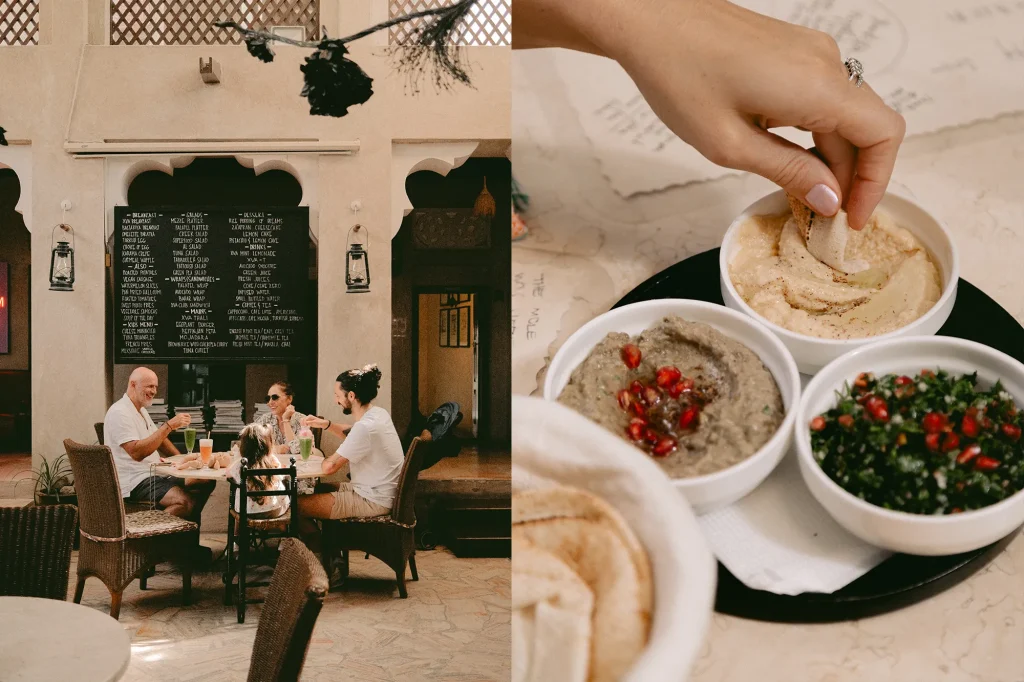
At XVA Art Hotel, Charlie Koolhaas presents After the Image, a project that turns one of the hotel rooms into a lived-in archive of Dubai’s architectural past.
Moving between a hotel room installation and a gallery presentation, the exhibition brings together photography, textiles, sculpture, and everyday objects drawn from Koolhaas’ long-term research into the city’s changing urban landscape.
Charlie’s photographs record Dubai’s architectural history through the details that are often passed over: facades, tiles, patterns, textures and surfaces. She then transforms these images into sculpture, clothing, furniture and objects, bringing fragments of the city’s modern heritage into the room, the hand and onto the body, giving them another life beyond the photograph.
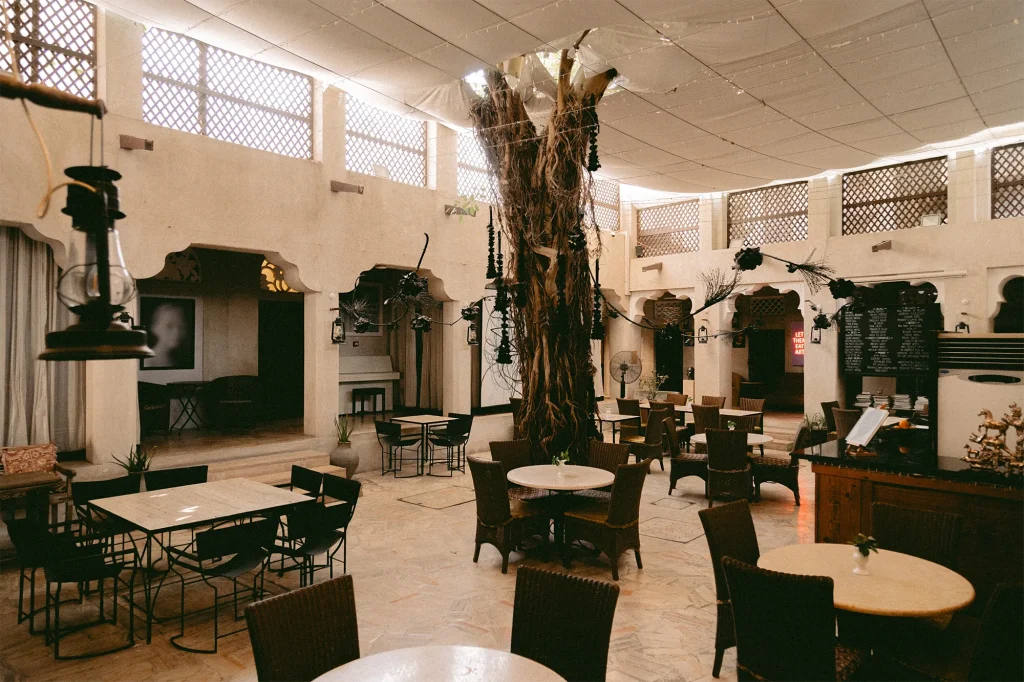
XVA Art Hotel has its own place in this history. As one of Dubai’s early contemporary art spaces, set within the heritage architecture of Al Fahidi, it sits between preservation and experiment, between the old city and the cultural scene that grew around it.
In After the Image, the room itself becomes the archive. Rather than treating the archive as something sealed away, the project makes it porous, domestic, and alive.
This project is supported through the Modern Heritage Grant Program, an initiative by the UAE Ministry of Culture, in collaboration with Zayed University and Majra – National CSR Fund.

The exhibition in view.
LOCAL
Artist Statement
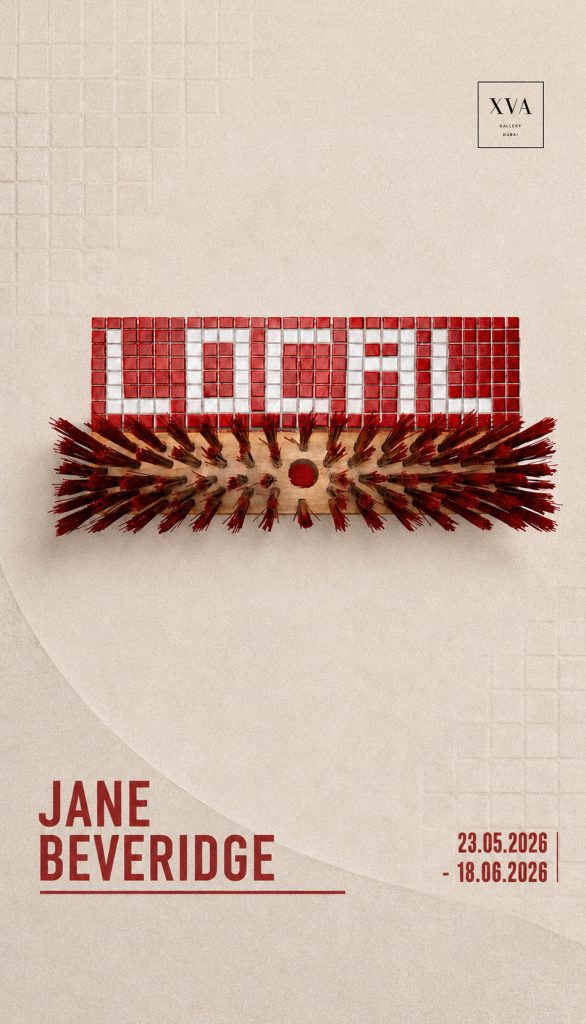
Swimming pools and construction sites. Dusty DIY stores and haberdasheries. The kind that have been there forever – or at least since 2002, when I arrived in Dubai. Jam-packed from floor to ceiling with thread, fabric, tools, and brightly coloured domestic objects, these spaces are crammed with possibility. They are often overlooked in a city best known for its malls and extravagance, but they are among my most cherished places in Dubai.
DUBAI is a five letter word, as is LOCAL. For years, I have been collecting five-letter words – from TRUST to TRUTH, VOICE to GRACE, ALIVE to TOUCH. Five is the limit of complexity for the human mind, according to mathematician Frank Ramsey. Beyond that number the thresholds for order grow at an extraordinary rate – faster than exponentials, faster than anything we can compute. My background in Graphic Design, studied in the 1990s, instilled in me a lasting fascination with the form and meaning of letters, numbers, and words; the emotional power of language intertwined with the visual power of art.
Beyond this, my visual palette and material inspiration are rooted in the streets. I am drawn to the beauty of cracked, stained, and weathered walls as well as surfaces patched with plaster or paint – they read like large abstract paintings. Corrugated cardboard, concrete, sand, rust, tangled wires, weathered wood – all find their way into my work, each carrying a story of time, place and texture.
I am captivated by the ordered mosaics that line swimming pools. Much like swimming lengths of a pool, repetition is central to my practice. The rhythmic act of gluing tiles or stitching, wrapping, knotting – repeating the same gesture over and over – becomes meditative, a quiet form of devotion. Whether working with paint, string, fabric or mosaic, I am fascinated by pattern, rhythm, and the quiet persistence of making.
Bio
Born in Edinburgh in 1976 and raised in Hong Kong, Jane Bailey Beveridge is a visual artist and dedicated art educator based in Dubai. She studied Graphic Design and Fine Art at the University of Brighton, graduating in 1998. In 2002, she joined the Art Department at Dubai College, where she has served as Head of Art since 2007.
Her work is informed by a background in Asian contemporary culture and graphic design, which fostered a lasting fascination with the form, symbolism, and emotional resonance of language. This interest is further shaped by the urban landscape of Dubai, particularly its ever-present construction sites. Drawing on these influences, Beveridge creates mixed-media assemblages that combine painting with mosaic, textiles, found objects, and concrete. She often refers to these works as “five-letter-word adverts”, exploring the intersection of language, materiality, and visual impact.
The exhibition in view.
White
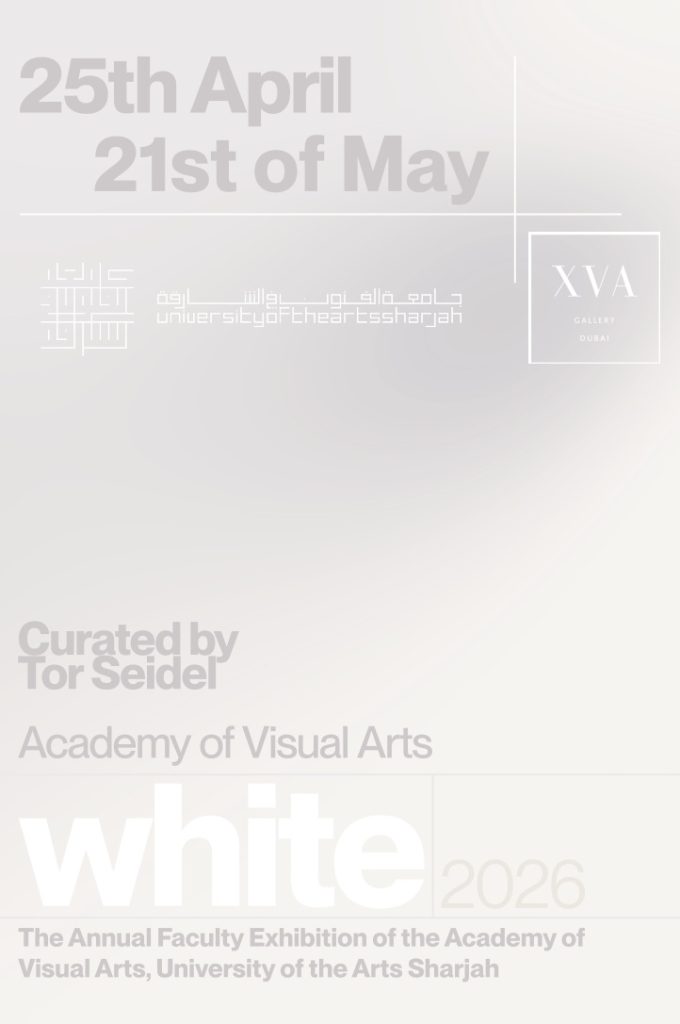
XVA Gallery Dubai, in partnership with Professor Tor Seidel (Curator) presents the Academy of Visual Arts University of the Arts Annual Faculty Exhibition, on view from April 25th
The exhibition in view.
Fractal
Coming up at XVA Gallery – Fractal, by Huma Shoaib
Join us from February 07th to March 05th, 2026 for an exhibition that explores chaos as fractal paradox; where perfect, infinite patterns of existence, spirituality and free will will repeat across scales, blurring the line between divine order and self-destructive conflict.
Curatorial Text
The chaos that we’re living in, is it really chaos? Or is it a simple idea repeated infinitely? Causing an illusion of complexity thus giving way to chaos.Fractals are infinitely complex patterns that are self-similar across different scales. They are created by repeating a simple geometric design that can be scaled up or down.We know that the structure of existence develops on fractals, be it hidden to the eye or at a cosmic level. As per spiritual concept this presence of fractal construction gives way to the notion of divine being present in every level of reality. There is a sense of perfection and infinity which resonates with One single entity that creates this vastness.
The question arises at this point when everything is being created on a perfect design, then what gives way to chaos. Humans are a part of fractals. Our anatomy, our brain, our biological functions work in a systematic pattern, then how does the desire for destruction and exploitation enter this intricate system? Maybe this is where free will comes in where the structure of fractals becomes complex and turns into chaos. Some theories, like the “Fractal Theory of War,” propose that social and psychological dynamics mirror the brain’s recursive patterns. This suggests that the same drivers of conflict at a small scale (e.g., interpersonal rage) are reflected in large-scale conflicts (e.g., war between nations), making war a self-similar pattern of behavior. At this point this whole idea seems like a paradox.Perfection and destruction.Huma’s work tends to go through the process of breaking down this chaos into simple fractal structure. The correlation between spirituality and fractal fabric is basic. Stripping the chaos into nothingness of one’s existence. Similar to the sufic ideology letting go of your ego and your self to become one with the divine. The action of shredding pages from books on war history and realigning mirrors this sufic ideology. In parallel breaking down the poetry text from words into letters and Nuqta (dots) is yet part of the same process.
Artist Statement As the 17th century Punjabi sufi saint and poet, Bullhay Shah said, “The whole essence lies in the nuqta (dot)” In this instance ‘dot’ refers to the minimality of existence.Age-old beliefs have been glorified and evolved over a period of time in order to feed to certain ideologies and facilitate larger agendas. By using various sacred, religious and political symbols I tend to explore the similarities between different belief systems and political motives.
Significantly influenced by sufi ideologies, my work visually rests as serene and meditative in parallel to the disturbing questions of division and social hierarchy arising from them. Interchangeably, sufi teachings are generally identified as highly individualistic and harmonious practices while being on the contrary- Observing the sporadic existence of dervish from the rise of sufism centuries ago,having being taken a vow of selfless love and distancing from the norms of society, they were and until now are deemed as controversial figures. Their presence brings uneasiness in social settings and questions the elaborate ways of the tediously complicated belief system. Similar to the silent uneasiness I try to achieve through my practice. Manifesting creatures like bees, birds and fish as symbols for their inter-religious references, geo-location and life cycle. Ornate and complex geometric drawings hailing from centuries of tradition of being adorned with natural pigments and organic materials, whilst I choose to treat them with fluorescent colors that are industrially made and artificial in nature implying towards the need of beliefs becoming more synthetic and fabricated rather than being the innate desire to be spiritual and organic. Consistently moving between these ideas the imagery stands as a metaphor and holds a multitude of meaning. Actions like shredding and restructuring pages from history books on war, reducing words from letters to dots (nuqta). Coming forth as a process of unlearning a plethora of information being fed over a period of time. In totality my practice melts down to a consistent effort in breaking down or simplifying the complexity of fabricated information into the importance of one single entity. One minimal existence that contains all.
The exhibition in view.
The Truth
Coming up at XVA Gallery – The Truth, by Hussein Al Mohasen
Join us from January 10th to February 05th, 2026 to explore how visual art can reveal truth, inspire hope, and connect people through colour, poetry, and expressive techniques.
Vernissage on January 10th from 3 to 6pm. See you at XVA!
Curatorial Text
I believe that visual art is an important medium to make people see and perceive the truth. I tried to express my thoughts and feelings of peace and the love of humanity in a different colourful perspective of seeing things.A piece of visual arts plays a big role in our lives, sometimes looking at a cover magazine and its title inspires the artist where he starts constructing images in his mind and just goes along with living this experience; reaching an area where he needs to visually communicate.
With my new body of work I am trying to reach what is beyond reality, to go where I want the viewers to experience a visual journey, which makes them see reality in a hopeful, peaceful, manner; even if reality, sometimes, is not as desirable as we want!
Colour and poetry are very important in my work, where the different connotations associated with certain poetry, text in different languages and colours beautify what I am trying to convey through art. I personally find graffiti very inspiring. Seeing the impact it leaves on people from all around the world, a huge impact is obtained with only a few words being sprayed onto walls. I find the physicality of creating this type of art is highly liberating, as well as the spectrum of colours I set into my palette.
Bio
Visual artist Hussein Al Mohasen (Qatif, Saudi Arabia, 1971) has been active in the art world in the Gulf region since his first appearance in 1999 at the Al-Janadriya Festival in his native Saudi Arabia, where he has since then occupied a place alongside the pioneering Saudi artists. Al Mohasen’s work, characterized by a singular dialogue between the audience and the artist, conceives of images and visual environs as a series of surgical incisions, cutting open the theater of horror and comedy, called the Middle East, into frozen frames. But these images are never static; Al Mohasen’s sharp-colored stenciled images translate into continuous and extended narratives of experiences that not only describe the world, but actively participate in it.
In his most recent body of work, the Saudi artist has moved away from abstract surfaces into symbolic and iconographic imageries, reflecting now the endless transitions of the contemporary between digital and real, political and social, private and public and the continuous transformation of the Gulf region, alternating a liquid modernity with solid traditions and histories. Unlike other artists in the Middle East experimenting with graffiti, Al Mohasen understands the acute sense of irony with which pop art was riddled since the outset, and has incorporated his humorous reflections into the altogether tragic narratives of Arab history. His work is both conceptual and liberating, drawing on art from the public space, but executed here with the fine precision of a cartographer. Behind the obvious simplicity of his works, lurks a decades-long journey shaped by poetry from the Arab world and the complex intersections between modern spaces and personal freedoms. Al Mohasen’s work is visually global and overcomes regional paradigms, presenting the contemporary Arab experience after the fashion of the poetry and music that inspired him: In the end, we all speak the same language. Hussein Al Mohasen’s work has been exhibited all over the Middle East since 1999. His most recent solo and group exhibitions have been held in Bahrain, Kuwait and the United Arab Emirates.
The exhibition in view.